
Episode #005 - Aristotle Part 1
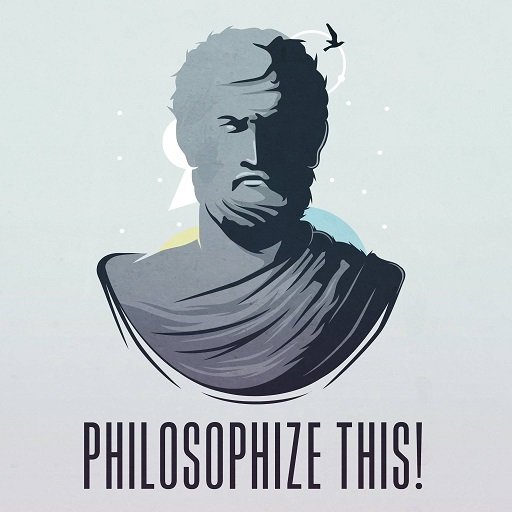
Aristotle Part 1
This episode explains Aristotle’s idea that the ultimate goal of life is to live well, or be truly happy. He believed happiness comes from fulfilling our natural needs—like health, knowledge, and friendship—through consistent, virtuous habits such as courage and moderation. While everyone’s path looks different, Aristotle argued that the real goods we need are the same for all humans. Living well requires planning, practice, and some luck, but it’s shaped most by what we do every day, not just what we believe.
Further Reading:
Nicomachean Ethics by Aristotle, translated by Robert C. Bartlett and Susan D. Collins (2011)
Happiness: A Guide to a Good Life, Aristotle for the New Century by Jean Vanier (2008)
Aristotle on Happiness, Virtue, and Wisdom by Bryan Reece (2023)
See the full transcript here.

Thank you to everyone who makes this podcast a possibility in the future.
I could never do this without your support! :)
Episode #004 - Plato
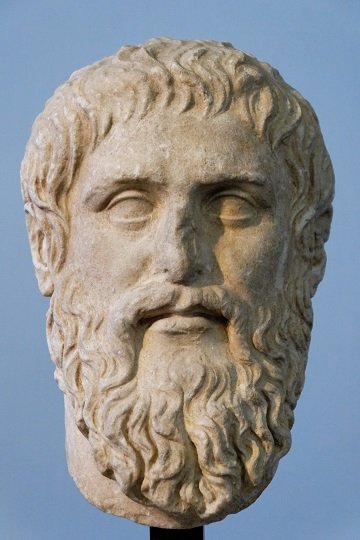
Plato
This episode covers Plato’s most important ideas—his Theory of Forms, the Allegory of the Cave, and the concept of platonic love. It explains how Plato preserved Socrates’ legacy through dialogues and founded the Academy to train future philosophers. It also explores his vision of a just society led by philosopher-kings and how his ideas shaped centuries of thought in philosophy, politics, and knowledge.
Further Reading:
The Republic by Plato, translated by Benjamin Jowett (2014)
The Allegory of the Cave by Plato, translated by Benjamin Jowett (2016)
Philosopher-Kings: The Argument of Plato’s Republic by C. D. C. Reeve (2006)
See the full transcript here.
Thank you to everyone who makes this podcast a possibility in the future.
I could never do this without your support! :)
Episode #003 - Socrates and the Sophists
Socrates and the Sophists
This episode talks about how, in ancient Athens, teachers called sophists taught people how to argue well, even if they weren’t right. They believed truth was different for everyone. Socrates disagreed—he thought there were real answers about right and wrong. He spent his life asking people tough questions to help them think more clearly. People didn’t always like this, and eventually he was put on trial and sentenced to death. But his way of thinking inspired philosophy for generations.
Further Reading:
Socrates and the Sophists, Plato (2011)
The Dream of Reason, Anthony Gottlieb (2000)
Socrates: Ironist and Moral Philosopher, Gregory Vlastos (1991)
See the full transcript here.
Thank you to everyone who makes this podcast a possibility in the future.
I could never do this without your support! :)
Episode #002 - Italian Pre-Socratic Philosophy
Italian Pre-Socratic Philosophy
This episode introduces the beginnings of Western philosophy through the lives and ideas of Pythagoras, Parmenides, and Empedocles. Pythagoras believed numbers revealed the universe’s structure and led a strict spiritual community. Parmenides used logic to argue that change is impossible, while Empedocles offered a middle ground, saying all things are made of four elements shaped by love and strife. Together, their ideas helped move human thought from myth to reason.
Further Reading:
The Presocratic Philosophers: A Critical History with a Selection of Texts by G. S. Kirk, J. E. Raven, and M. Schofield (1983)
Presocratic Philosophy: A Very Short Introduction by Catherine Osborne (2004)
The Illustrated To Think Like God: Pythagoras and Parmenides—The Origins of Philosophy by Arnold Hermann (2004)
See the full transcript here.
Thank you to everyone who makes this podcast a possibility in the future.
I could never do this without your support! :)
Episode #001 - Ionian Pre-Socratic Philosophy
Ionian Pre-Socratic Philosophy
This episode traces the roots of philosophy back to early human migration, showing how stable communities made space for reflection beyond survival. It introduces the first philosophers, like Thales, who believed everything was made of water, Heraclitus, who saw the world in constant change, and Democritus, who imagined all matter as tiny, invisible atoms. While their ideas were often wrong, they marked a shift from myth to reason and laid the groundwork for philosophical thought.
Further Reading:
Early Greek Philosophy by Jonathan Barnes (2001)
The Presocratic Philosophers by G.S. Kirk, J.E. Raven, and M. Schofield (1983)
Presocratics: Natural Philosophers before Socrates by James Warren (2007)
See the full transcript here.
Thank you to everyone who makes this podcast a possibility in the future.
I could never do this without your support! :)